SHIPPING
 RETURNS
 Contact us


If you’re fed up with all of the drama, discomfort and inconvenience that comes with traditional hair removal methods, then IPL hair removal at home is the ideal solution, as many have discovered. But it’s worth learning about intense pulsed light technology before investing in an IPL hair removal device.
How IPL Hair Removal Works
Intense pulsed light technology for IPL at home works by progressively reducing hair regrowth through gentle pulses of light to the skin that heat the hair follicle/root, putting hair in a resting phase. Existing hair then naturally sheds, and regrowth occurs a lot more slowly, if at all. Light pulses range within the wavelength of 550 to 1200 nanometres, and our IPL device delivers 500,000+ flashes, meaning you’ll never need another!
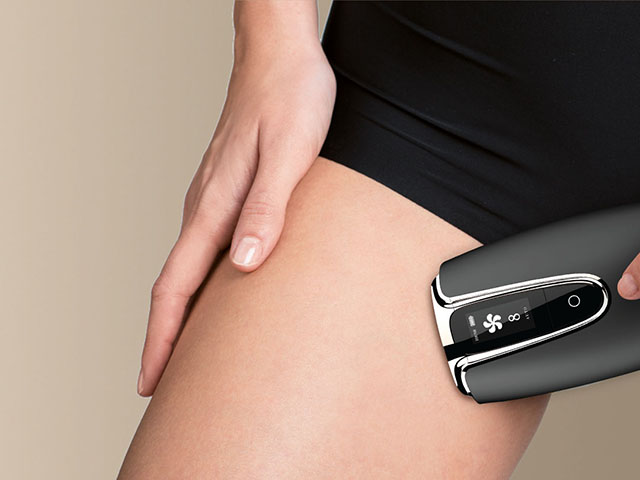
A home hair removal machine will have different power settings, typically with varying intensities of light for IPL hair removal. These are useful as skin tones differ and certain parts of the body tend to be more sensitive. In addition, light intensity settings can easily be increased or decreased at the press of a button.
When using your IPL hair removal device for the first time on a particular body part, it is recommended that you begin at a low setting and then gradually increase it for maximum efficacy and comfort. Also, refrain from looking at the flashes of light generated (even with glasses) when removing hair for safety purposes.
The Science: Why Light Targets Hair and Not Skin
IPL works on a principle called selective photothermolysis. In simple terms, the light is absorbed by melanin, the pigment that gives hair its colour, far more strongly than it’s absorbed by surrounding skin. That contrast is what lets the flash heat the hair follicle without damaging the skin around it.
This is also why hair colour and skin tone matter so much for results. The bigger the contrast between your hair colour and your skin tone, the more effectively the device can target the follicle. Fine, light-coloured hair (blonde, grey, red) has very little pigment, so there’s not enough contrast for the light to lock onto, which is why IPL is far less effective on those hair colours.
IPL at Home: What to Expect Session by Session
IPL hair removal at home is typically an 8-10 week course of treatment. You apply the IPL to the skin area you’re targeting every two weeks. Here’s a rough guide to what happens at each stage:
- After treatment 1: No visible change yet. Hair sheds naturally over the following 1-2 weeks as treated follicles enter a resting phase.
- After treatments 2-3: A noticeable reduction in regrowth in the treated area. Hair that does grow back is often finer and lighter.
- After treatments 4-5: A significant decrease in hair growth and density in most people.
- After the full 8-10 session course: Long-lasting hair reduction, with most people needing only occasional maintenance sessions every few months to keep the area smooth.
Before using an IPL hair removal device, it’s important to remove hair on the skin by shaving or waxing first. This helps the light get absorbed by the hair below the skin. Avoid using depilatory creams though, to prevent skin reactions. Skin should be hair-free, clean and completely dry before IPL hair removal.
For full precautions before your first session, read our guide on is IPL hair removal safe.
Are you interested in at-home treatment? The best at-home hair removal devices provide the latest tech, a long lifespan, and a shape, size and design built for comfort and efficiency. They also come with a warranty.
At Redefining Beauty, our IPL Hair Removal Handsets offer all of the above. We even offer an extended warranty (4 years) and a 90-day money-back guarantee for a risk-free purchasing experience.
IPL vs Laser Hair Removal
A 2006 article from the Lasers in Medical Science journal compared IPL and both alexandrite and diode lasers. The review found no statistical difference in effectiveness, but a higher incidence of side effects with diode laser treatment. The effectiveness of both treatments ranged from 66% to 71%.
A 2009 study evaluated the rate of second-generation IPL hair removal. The results found that patients had 75% hair reduction after 4 months, and up to 80% after 8 months. This tracks with the technology’s development. See the full history of IPL hair removal since the 1990s.
In some instances, mainly for darker skin tones or certain hair colours, laser hair removal can be more effective. But laser is both more expensive and more inconvenient than IPL, as it must be done in clinic.
So there’s the hassle of finding and travelling to a clinic that has an available booking at a time that suits you, along with paying per treatment vs being able to buy an IPL device for the cost of one full body laser treatment.
And with IPL you can do it in the comfort and privacy of your own home, at a time that suits you, even while watching a show or browsing Facebook.
Order our home IPL hair removal device today!